
What’s happening?
CapRescue crews were deployed to two major incidents in Central Queensland, assisting patients in a highway crash and a cruise ship medical emergency.
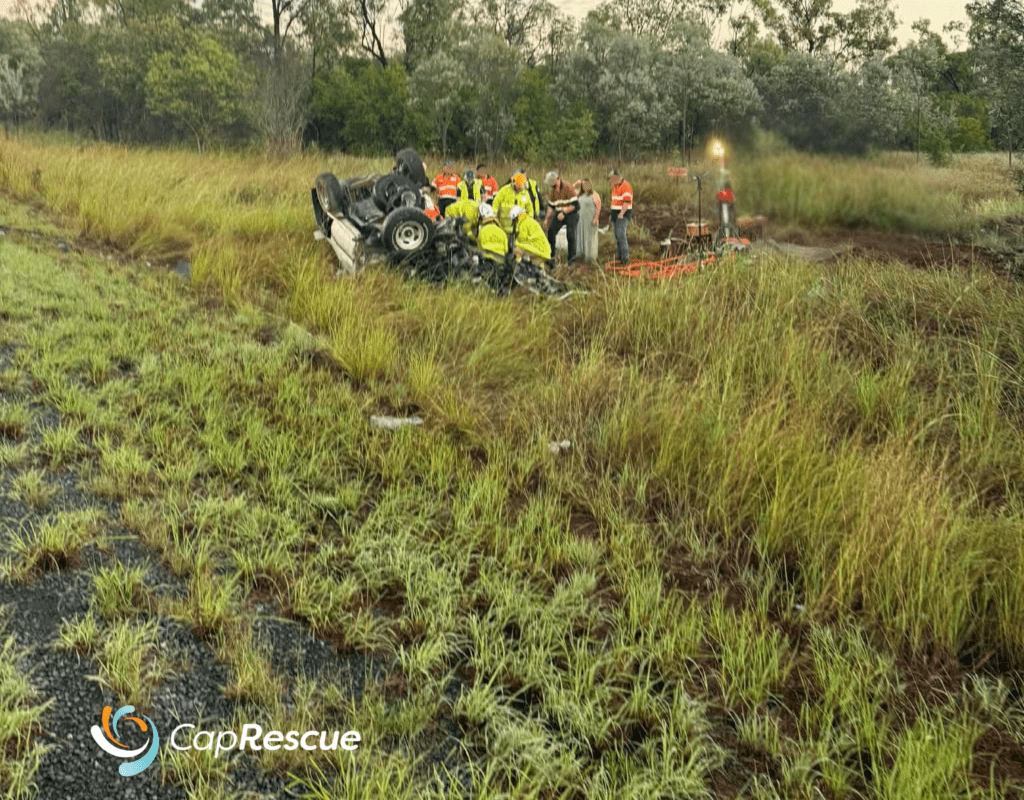
The first mission occurred in the early hours of the morning after a two-vehicle crash on the Capricorn Highway near Dingo.
Emergency services were called to the scene where one person was significantly trapped inside a vehicle. Queensland Ambulance Service paramedics treated multiple patients while Queensland Police secured the area and organised traffic so Rescue300 could land nearby.
Queensland Fire and Emergency Services crews helped extract the trapped patient from the vehicle.
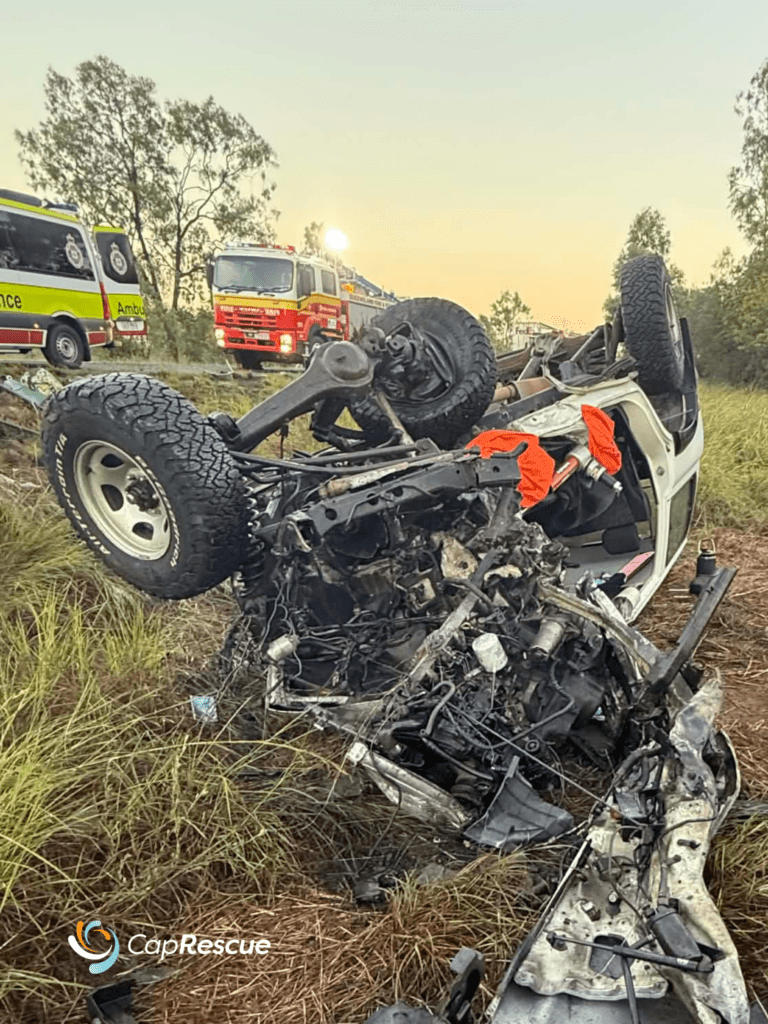
CapRescue worked with ground crews to treat and stabilise a man in his 40s who suffered multiple suspected fractures. Despite the severity of the crash, he was reported to be in a stable condition.
He was later airlifted to Rockhampton Hospital for further treatment.
In a separate mission the same day, CapRescue was tasked to assist a woman in her 70s who suffered a critical medical condition aboard the Crown Princess cruise ship off the Central Queensland coast.
The helicopter could not land on the vessel, so a Rescue Crew Officer and Paramedic were winched down to the ship. The patient was assessed and prepared for retrieval using a stretcher before being winched safely to Rescue300.
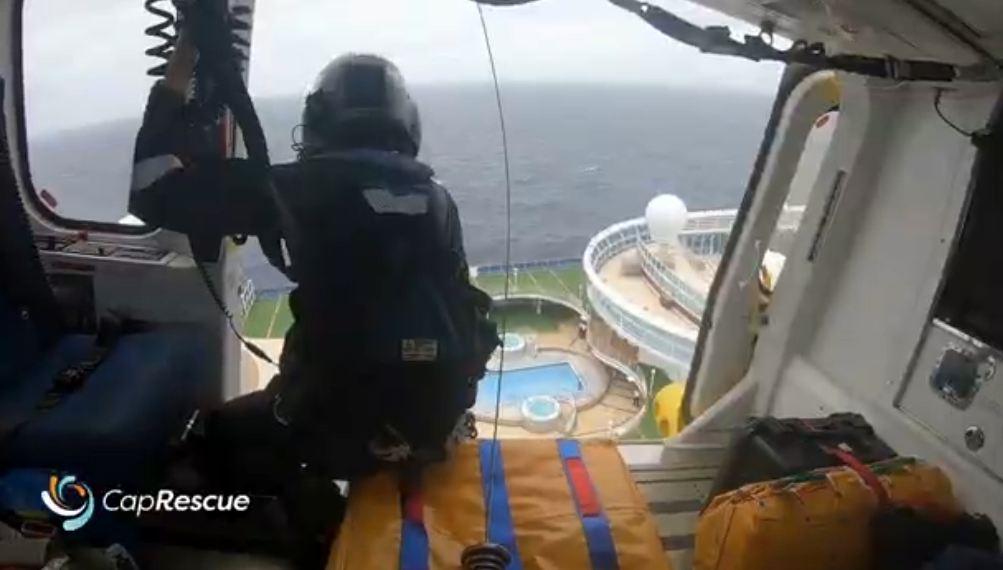
She was stabilised during the flight and transported to Rockhampton Hospital for further medical care.
Why it matters?
These missions highlight the vital role aeromedical services play across regional Queensland.
When incidents occur on remote highways or offshore, helicopters and trained rescue crews can provide urgent care and transport patients quickly to hospital.
The operations also show the level of coordination required between air and ground emergency services during complex rescues.
Local impact
Both incidents involved patients from Central Queensland who required rapid medical support.
For communities across the region, CapRescue provides critical access to emergency medical transport when distance, terrain, or location makes conventional response difficult.
The cruise ship retrieval also demonstrates how regional rescue crews assist maritime incidents along the Queensland coast.
By the numbers
-
At approximately 4.22 am, emergency services were called to the Capricorn Highway crash near Dingo that triggered the aeromedical response.
-
At about 10.30 am, CapRescue was tasked to the Crown Princess cruise ship for a primary winch rescue following a critical medical event.
-
Two patients were transported to Rockhampton Hospital, including a man in his 40s injured in the crash and a woman in her 70s rescued from the cruise ship.
Zoom in
The cruise ship rescue marked a significant milestone for Rescue Crew Officer Alysa Atkinson.
It was the first operation of its kind performed by her. The helicopter could not land on the vessel, which required a technical winch operation.
Check and Training Air Crewman Cam Fewtrell said preparation played a key role in the mission.
“The preparation provided by our training partners ensures our crew are ready to respond in high-pressure situations,” he said.
“Alysa’s performance yesterday is a great example of how corporate support directly contributes to patient safety and successful outcomes.”
Zoom out
Aeromedical services across Central Queensland frequently respond to emergencies in challenging locations.
These can include remote highways, offshore vessels and isolated communities where rapid medical transport is critical.
Training programs supported by partners such as Glencore help ensure rescue crews remain prepared for complex operations like winch rescues.
What to look for next?
CapRescue continues to work with emergency services and training partners to maintain readiness for complex rescue missions across the region.
The organisation also thanked Glencore for supporting critical training initiatives that help ensure Rescue300 crews remain ready to respond when people need them most.
