

What’s happening?
The Royal Flying Doctor Service Queensland Section is holding its 24-hour Giving Day on Wednesday, 11 March.
The appeal, called Take to the Skies, calls on Queenslanders to help deliver lifesaving medical care to remote, rural and regional communities.
During the campaign, every donation will be matched, doubling the impact for people living far from major hospitals.
The RFDS will also host a public activation at King George Square in Brisbane from 8:00 am to 2:00 pm.
The event will showcase the equipment and technology used to deliver care thousands of kilometres from the nearest hospital.
Visitors will see displays including a Medical Chest, a flight tracker and aeromedical equipment.
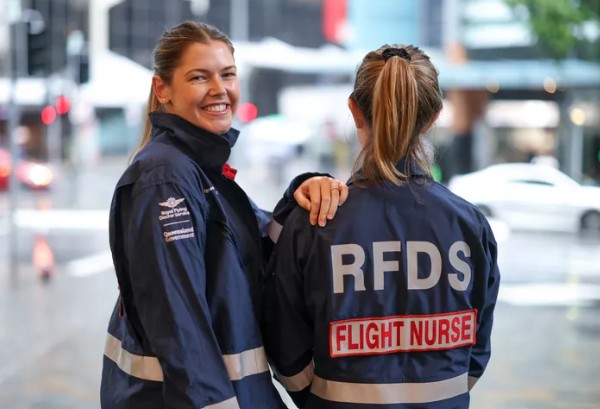
A CPR challenge run by RFDS flight nurses will also take place during the event.
RFDS ambassadors and representatives will be on-site and available for interviews, including Dr Ben Clarke, Luke Baxby and Ben Dobbin.
The appeal also shares real stories from patients whose lives have been impacted by the Flying Doctor.
One of those stories is Queensland mother Elle-Jay Hornery, who was airlifted to safety at 37 weeks pregnant after floodwaters cut off her remote property outside Thargomindah in southwest Queensland.
“When the RFDS urged me to get on the only plane leaving my area, it became real,” Elle-Jay said.
She had already been receiving antenatal care through the RFDS.
RFDS Nurse Manager Joanne Mahony had been checking in regularly throughout her pregnancy.
That continuity of care meant clinicians knew her location and how far along she was when flooding made evacuation urgent.
“I was already flooded in, so I couldn’t get to town,” Elle-Jay said.
“My brother-in-law flew me by helicopter to where the aircraft had just landed and we took off immediately.”
She left her husband, Mack, behind at the property.
“It was our first baby. I didn’t want to go into labour by myself in another town. But living out here, you don’t get a choice.”
Elle-Jay later welcomed her son Lachlan safely.
Another patient story comes from Brisbane executive Luke Baxby, who experienced the realities of remote medical access after a serious accident.
A mustering accident on a remote cattle station left him with severe facial fractures.
More than 15 hours’ drive from Brisbane, the only way to reach urgent surgery was by air.
“The areas the RFDS service simply don’t have access to the acute care we take for granted,” Luke said.
“Until you’re in that situation, you don’t fully grasp how critical that gap really is.”
Why it matters
Distance can be the biggest barrier to emergency healthcare for many Queenslanders.
In cities, hospitals are usually a short drive away. In remote parts of the state, access to urgent care can depend on aircraft.
RFDS State Aeromedical Lead Dr Ben Clarke said medical teams often work in challenging conditions while responding to emergencies.
“It’s not uncommon for us to perform high-skill critical care procedures in incredibly austere environments,” Dr Clarke said.
“Inside a confined aircraft cabin, wearing earmuffs, sometimes in turbulence, it’s a very different setting to a clinical environment.”
“But what we do in those early stages can make a massive difference to someone’s long-term quality of life.”
RFDS Queensland Section Chief Executive Officer Meredith Staib said the Giving Day helps ensure geography does not determine health outcomes.
“Every day, the Flying Doctor is a lifeline for Queenslanders in need of urgent medical care,” Ms Staib said.
“Take to the Skies is an opportunity for all Queenslanders to ensure families in remote, rural and regional communities can access the same high-quality care as those living in our cities.”
Local impact
Across Queensland, many communities rely on the Royal Flying Doctor Service for emergency retrievals and primary healthcare.
For people living far from major hospitals, aeromedical crews often provide the fastest pathway to urgent treatment.
The organisation also delivers preventative healthcare and telehealth support to remote communities.

By the numbers
-
RFDS supports more than 225 Queenslanders every day, providing healthcare services to remote, rural and regional communities across the state.
-
More than 25,900 consultations are conducted each year at RFDS GP and nurse clinics, helping patients access medical care closer to home.
-
More than 12,850 aeromedical evacuations are carried out annually, transporting critically ill or injured patients to urgent medical treatment.
Zoom in
The Royal Flying Doctor Service delivers emergency care in environments very different from a hospital setting.
Medical teams may carry out complex procedures inside aircraft cabins while travelling long distances.
The service also maintains strong patient relationships through ongoing care in remote communities.
In Elle-Jay Hornery’s case, that continuity meant clinicians already knew her medical needs when flooding created an emergency evacuation.
Zoom out
The RFDS Queensland Section operates a fleet of 25 aeromedical aircraft across the state.
These aircraft include 16 Beechcraft King Air B200 aircraft, four King Air B350CHW aircraft and five King Air B360 aircraft.
The service also supports remote communities with more than 1,300 medical chests linked to 24 hour telehealth advice.
More than half of RFDS services focus on primary healthcare such as dental care, vaccinations and mental health support.
The organisation has been providing lifesaving care to Australians for 98 years.

What to look for next
Queenslanders can visit the RFDS Giving Day activation at King George Square in Brisbane from 8:00 am to 2:00 pm on Wednesday, 11 March.
The 24-hour Take to the Skies appeal will run throughout the day to raise funds for lifesaving aeromedical care across Queensland.
