
What’s happening?
A smartphone photo has helped confirm the survival of a Queensland plant species that was presumed extinct in the wild.
Ptilotus senarius had not been recorded since 1967 and was believed to no longer exist in its natural habitat.
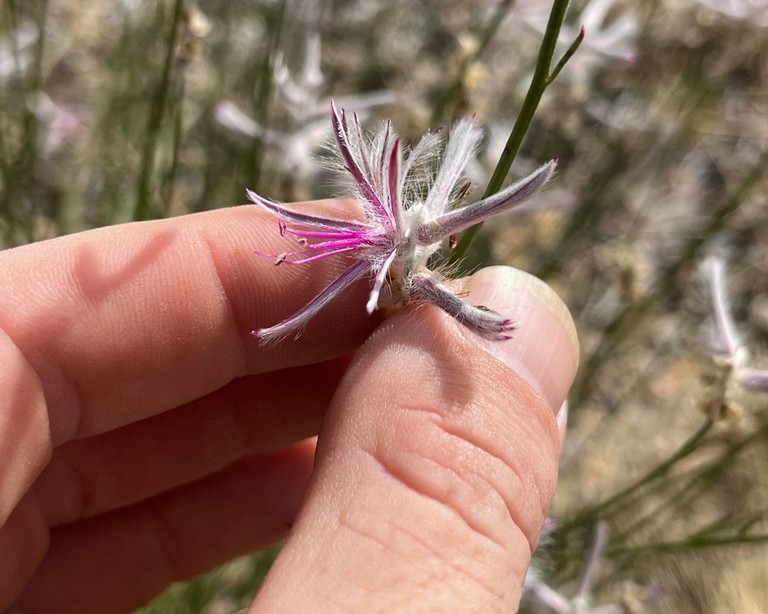
The rediscovery began in June 2025, when a photo of the plant was uploaded to the citizen science platform iNaturalist. The image was taken on private property in the Gilbert River region of northern Queensland by horticulturalist and bird bander Aaron Bean.
After the upload, experts reviewed the observation. A new specimen was later collected from the same property, which confirmed the species’ identity.
Why it matters
Researchers say digital tools now play a direct role in conservation science, particularly in remote and hard-to-access areas.
Platforms such as iNaturalist allow images taken in the field to be reviewed quickly by experts worldwide, helping identify rare or overlooked species.
Thomas Mesaglio from the UNSW School of Biological, Earth & Environmental Sciences said rediscoveries help guide future research and planning.
“Rediscoveries offer that opportunity to conduct follow-up, targeted surveys and consistent long-term monitoring to give us a better understanding of exactly where and how these species are distributed across the landscape,” he said.
Local impact
The plant was found on private land in northern Queensland, an area that can be difficult for researchers to access.
Such access challenges often limit formal scientific surveys, leaving gaps in biodiversity records.
Mesaglio said iNaturalist helps overcome those barriers.
“iNaturalist has especially become an invaluable tool for recording biodiversity on private property, which can often be difficult to access by professional researchers,” he said.
By the numbers
-
Ptilotus senarius had not been recorded in the wild for 58 years, having last been seen in 1967.
-
The observation that led to its rediscovery was uploaded to iNaturalist in June 2025.
-
The rediscovery was publicly announced and reported on 19 January 2026.
Zoom in
A single upload to iNaturalist started the verification process.
Experts reviewed the images and supported further investigation, which led to confirmation through a physical specimen.
Zoom out
Digital platforms now support biodiversity research at scale.
They allow fast sharing of observations from remote regions and connect local finds with scientific networks.
What to look for next?
Researchers may now examine how widespread the species is across the region.
