
What’s happening?
The new Brisbane Stadium has locked in three major design decisions as concept work continues.
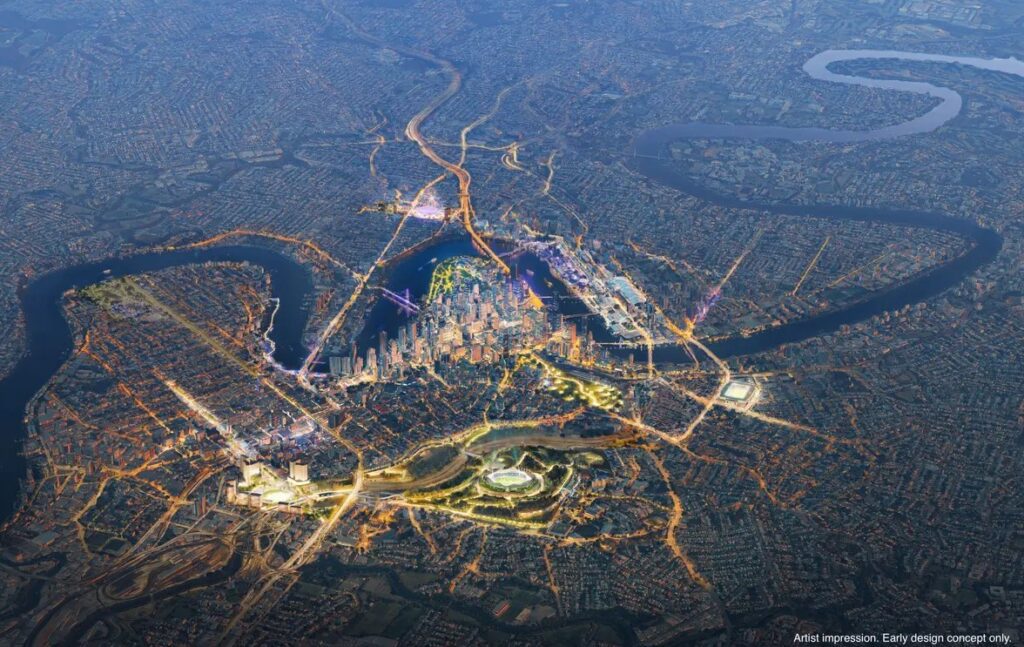
The venue will be located in Victoria Park near Gilchrist Avenue. The field size will match the Melbourne Cricket Ground. The playing surface will run east to west.
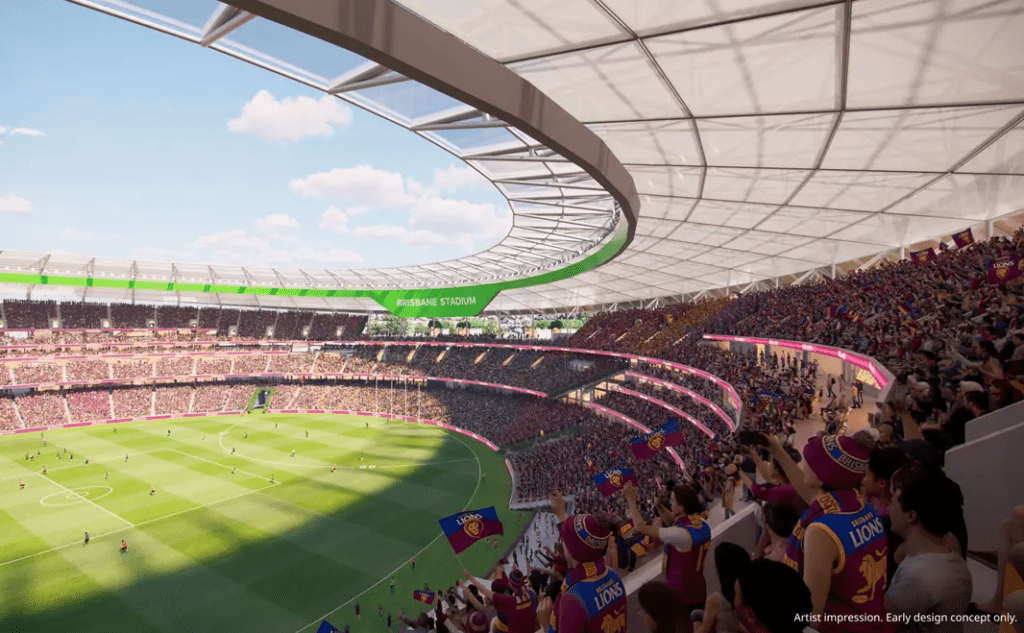
New renders have also been released as part of the early concept design stage.
The stadium will host the opening and closing ceremonies and athletics at the 2032 Olympic and Paralympic Games. It will then become Brisbane’s main stadium.
Why it matters?
These design choices will affect how the venue works on event days and how it serves the city after the Games.
Games Independent Infrastructure and Coordination Authority (GIICA) says the site will maximise access to public transport and place the stadium inside a naturally occurring amphitheatre. It also says the chosen location reduces congestion in the north-east part of Victoria Park.
The field layout was chosen after workshops with AFL and cricket and analysis of sun position, winds and legacy operational needs. GIICA says the east-west layout removes the need for a second media centre under combined AFL and cricket use.
The MCG-sized field was chosen after comparing major oval venues and was supported by AFL, Cricket Australia, concert promoters and Brisbane 2032.
Local Impact
Brisbane residents are being shown a project designed for long-term city use, not only for 2032.
The design team says the venue should feel unmistakably Brisbane, with comfort in the local climate, better transport links and a welcoming feel throughout the year.
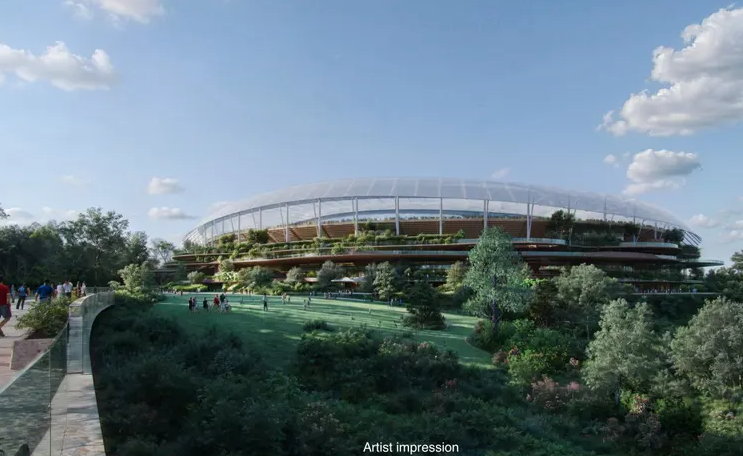
The stadium is also being designed to work with Victoria Park’s landform and landscape.
By the numbers
- The Design Statement describes the project as a 63,000-seat stadium for Brisbane’s long-term future.
- Designers assessed four major oval stadiums before selecting the final field dimensions.
- The stadium is part of the $7.1 billion Games Venues Infrastructure Program, with early site preparations from 1 June 2026, early works later in 2026 and construction in 2027.
Zoom in
The concept design builds on the winning Queensland response first shared in January. It embeds the stadium into Victoria Park’s topography with a verandah inspiration, floating roof form and bridge connectivity.
The Design Statement says, “The concept is simple and deliberate: a Stadium in the Landscape.”
It continues, “Rather than placing a 63,000-seat object on top of Victoria Park, the stadium will nestle into the parklands and allow the landform and vegetation to do the work.”
The statement also says, “The stadium bowl sits in a valley between two ridges … Spectators pass through nature and parkland rather than climb toward a monument. The park flows over and around the venue, softening its edge and binding it to the park and forest slopes. It is less a building in a park, but instead a park that flows around and through a stadium.”
It adds, “The design privileges shade, breeze, movement, and everyday access. It is active on event days, but generous and open on all other days. In legacy mode, the Stadium is not an isolated venue but a catalyst for a healthier, more connected city, embedding biodiversity, cultural continuity, and community life at the centre of Brisbane’s Olympic story.”
Zoom out
GIICA CEO Simon Crooks said the design work was revealing “a truly Queensland-take on the traditional stadium emerge, bringing the outside in and celebrating our lifestyle and natural environment.”
He said, “It is an exciting time for the team here at GIICA, and all of Queensland, as we work through the rigorous design process to bring the stadium vision to life, and later this year start early works and in 2027 construction.”
COX Architecture Director and Chair Richard Coulson said, “It is great to see the vision the design team has shared in January is now being tested and developed with stakeholder input.”
He added, “It retains the ambition of a venue that responds to place with the inclusion of technology that people will expect in a world-class venue.”
He also said, “The evolving arrangement of the Stadium in the park will be a key part of unlocking the connectivity of the park with the wider precinct and the city.”
Hassell Managing Principal Lucy O’Driscoll said, “We recognise this as a once-in-a-generation opportunity to lead the design of Brisbane Stadium, a venue that will showcase Queensland to the world while truly serving the local community every day.”
She added, “Every element of our design responds to Queensland’s unique climate and lifestyle, ensuring the stadium can accommodate not only global events, but also becomes an enduring part of the state’s daily life and legacy for generations to come.”
What to look for next?
The next phase is more concept refinement over the coming months.
Early site preparations are due from 1 June 2026. Early works are expected later in 2026, before construction begins in 2027.