
What’s happening?
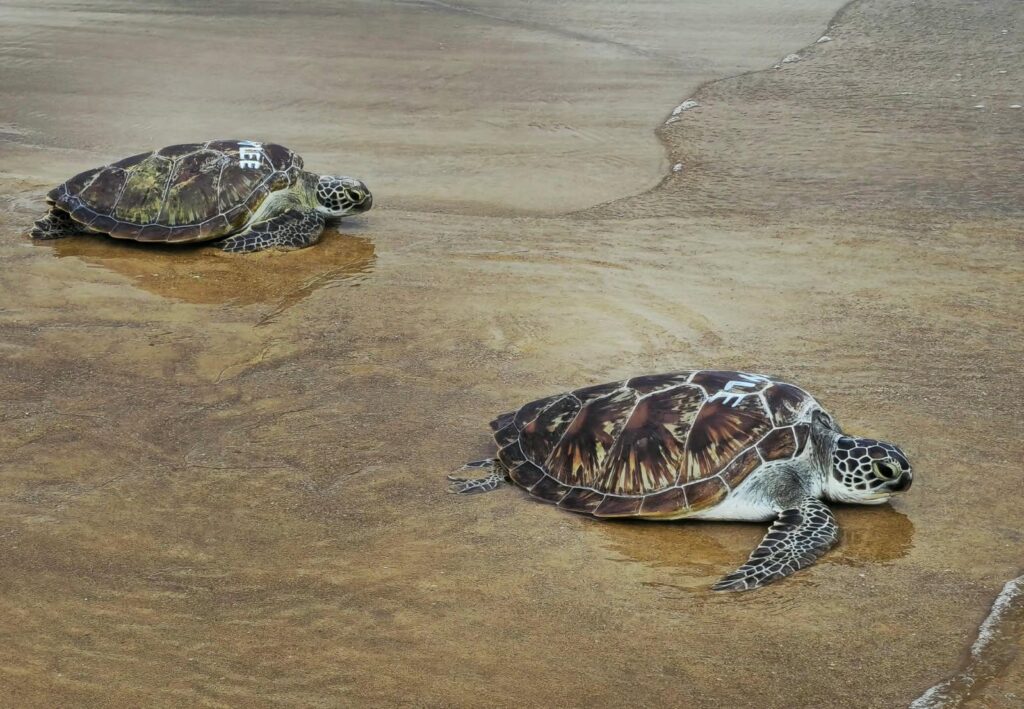
Quoin Island Turtle Rehabilitation Centre has reached a major milestone, returning turtles number 400 and 401 to the ocean. The release took place on the island with staff, sponsors and community partners watching as Kyle and Maylee swam home after months of care.
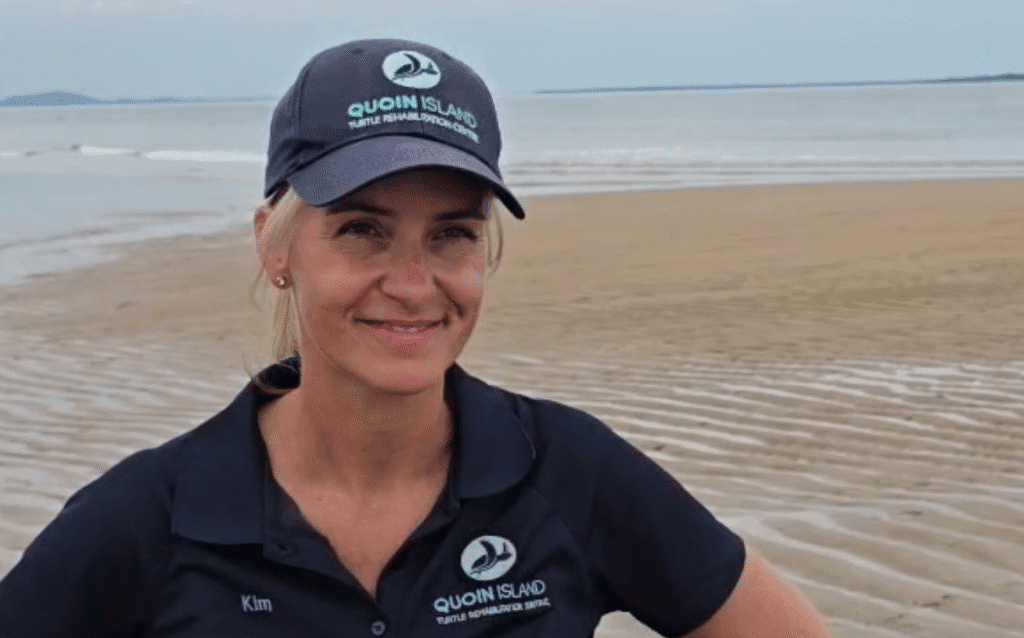
Manager Kim van Oudheusden said the moment carried real meaning. “So today we released number 400 and number 401. So Kyle and Maylee and every turtle release is special but this is extra special because it is a big milestone to be able to release 400 animals, well 401 to be precise, back into the wild where they otherwise would have passed away.”
Why it matters
The centre deals with sick and injured marine turtles across the Southern Great Barrier Reef. It covers a long stretch of coastline and relies on community calls, trained volunteers and partners to respond. The work is intensive and costly, yet essential for many turtles that would not survive without intervention.
Kim said the operation gets no ongoing government support. “Unfortunately, there is literally no government funding at all available for operational costs. In 2024, our costs just for operational expenses was 566,000 dollars and we get no government funding.”
Local impact
The centre monitors 400 kilometres of coastline and adjoining islands. Many strandings start with a call from locals who see turtles on beaches. Kim reminded visitors to ask for help rather than act alone. “Sometimes turtles will actually come on land to bask, they do that intentionally. You do not want to interfere with that. You also do not want to put them back in the water when they are really weak because if they cannot lift their head they can drown.”
She said even well meant actions can put turtles at risk. “It has happened quite a few times and people have the best intentions to put turtles back into the water when they see one. But definitely do not do that. Just give us a call.”
By the numbers
• The centre has released 401 turtles over 13 years, showing strong long-term recovery efforts.
• Maylee stayed 138 days, far longer than the 74-day average for patients.
• Kyle stayed in care for 73 days, which is one day shorter than the 74-day average stay for all patients.
• The centre carried 566,000 dollars in operational expenses in 2024, with zero government funding to cover them.
Zoom in
Kyle and Maylee came from very different situations. Kyle arrived through the Gladstone turtle rodeo. “Twice a year in the Gladstone Harbour, there is a turtle rodeo,” Kim said. “They actually do a health assessment on all turtles. We collaborate with the Department of Environment and Science on that. They caught 203 turtles this time, and five of those came into care with us. And Kyle was one of them.”
Kyle was underweight when he arrived. “He had some elevated white blood cells in his blood smear,” Kim said. “He started feeding straight away. He started packing weight on quite quickly.” He stayed 73 days and recovered well.
Maylee came from Lily’s Beach, only a short distance from the centre. “One of our stranding coordinators, Ian Anderson, found Maylee on the beach. She was very underweigh,t and he drove her to Gladstone ,and we took her to the island.”
Her condition was severe. “She did not eat for a month,” Kim said. “She just started eating small bits of seaweed. Nothing like for her to actually gain weight or get better, and she was quite underweight. So we were not sure if she was going to make it.”
After eight weeks, she began to improve. “She finally started feeding like a normal diet and slowly building that up.” She stayed 138 days before she was ready to go home.
Both turtles were eager to return. Kim laughed as she described the drive. “I had to stop twice to put Maylee back in her tub because she had literally just propped herself up and had her flippers all the way over the edge. She is so strong and healthy.”
Zoom out
The centre works with many partners when numbers rise. “We always talk to other centres,” Kim said. “We always get advice from other centres as well. We talk to centres all along the East Coast, but even on the West Coast, we all help each other out.”
Her team works closely with Australia Zoo, Sea World and Sea Life. “When we are almost at permit limits, we can transfer turtles to those other facilities and they will take turtles for us and care for them. And then when they are ready, we can get them back up and still release them wherever from.”
Two major sponsors were present for the release. Kim said their help is vital. “Without their sponsorship, we would not be able to save any sea turtles at all.”
McCosker Contracting director Danny Hughes said their involvement goes back years. “We have been a part of this for a long time and we absolutely love it. We are all about trying to help these turtles and be a part of the support for the system.”
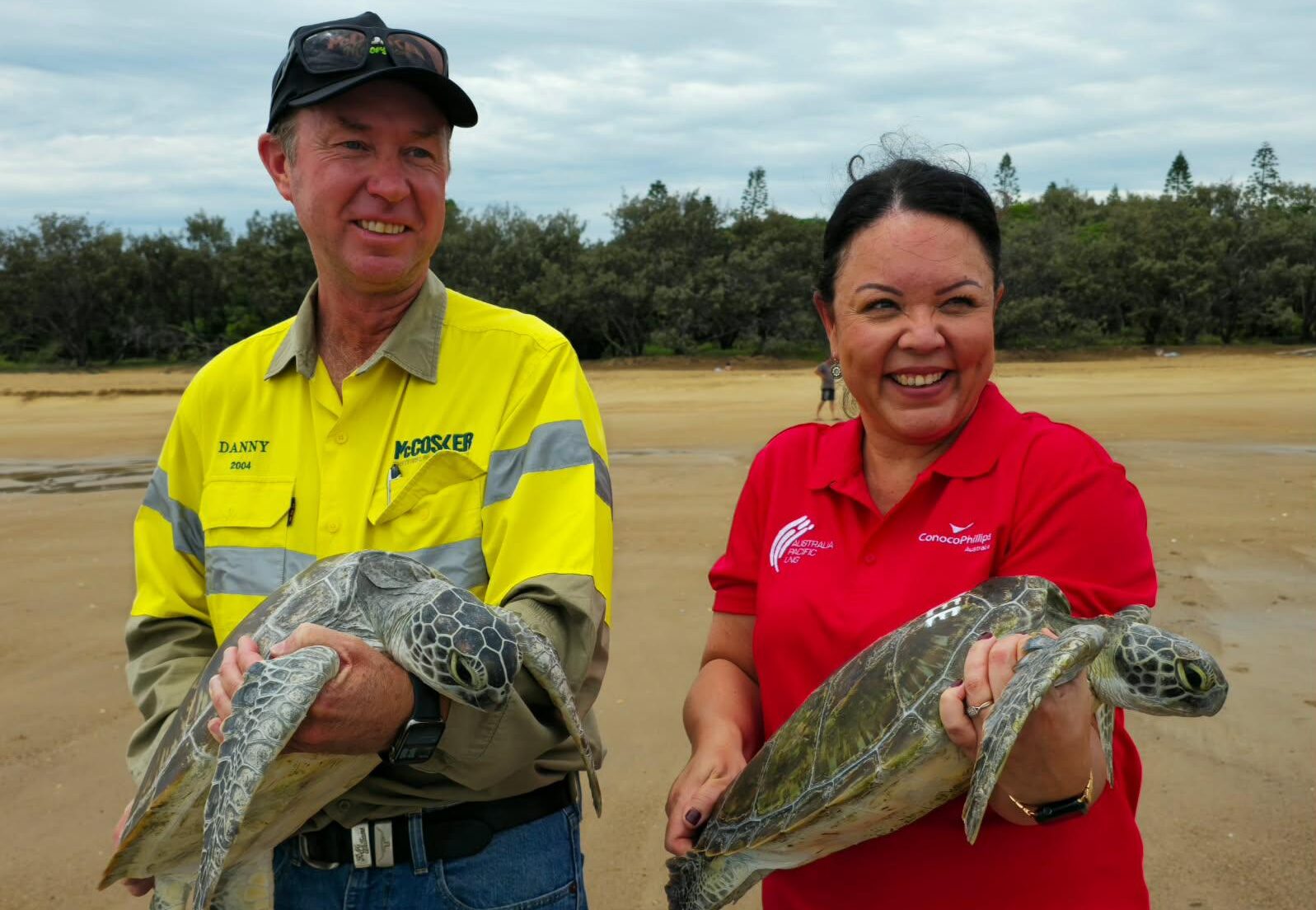
He said releasing number 400 was unforgettable. “Who does not like releasing turtles and 400, that is just special as. It is a great feeling to be a part of it.”
Danny also shared the joy of seeing families on the beach. “There is no better feeling. It is great to see their expressions. It is awesome.”
The company plans to continue supporting the centre. “We are fully behind this and we will continue to be.”
ConocoPhillips Stakeholder Relations Manager Chantale Lane spoke about their involvement. “ConocoPhillips, a downstream operator of APLNG, has been involved with the Coinal Island Turtle Rehabilitation Centre for nearly 10 years now.”
She said the releases feel meaningful every time. “I feel really inspired and special that we can be a part of those turtles returning back to the ecosystem. It is just special to see that they have come through on the other side and survived.”
Her team even helped name Maylee. “We have a turtle naming competition where we get the workforce families, kids to put forward some names and Maylee was one of those winners.”
Chantale said the partnership reflects their values. “As one of our sponsorship pillars is environmental stewardship, the marine ecosystem needs turtles. Being able to support that ecosystem through supporting the centre is really important.”
Seeing the work also motivates staff. “It really brings the pillars or strategy to life. They see that we are making a difference in the community where we operate and that we are part of that community.”
What to look for next
The centre currently has 13 patients. Warmer weather may reduce strandings, giving the team room to breathe. The work continues with partners, volunteers and sponsors as they prepare for the next recovery milestone.
