
What’s happening?
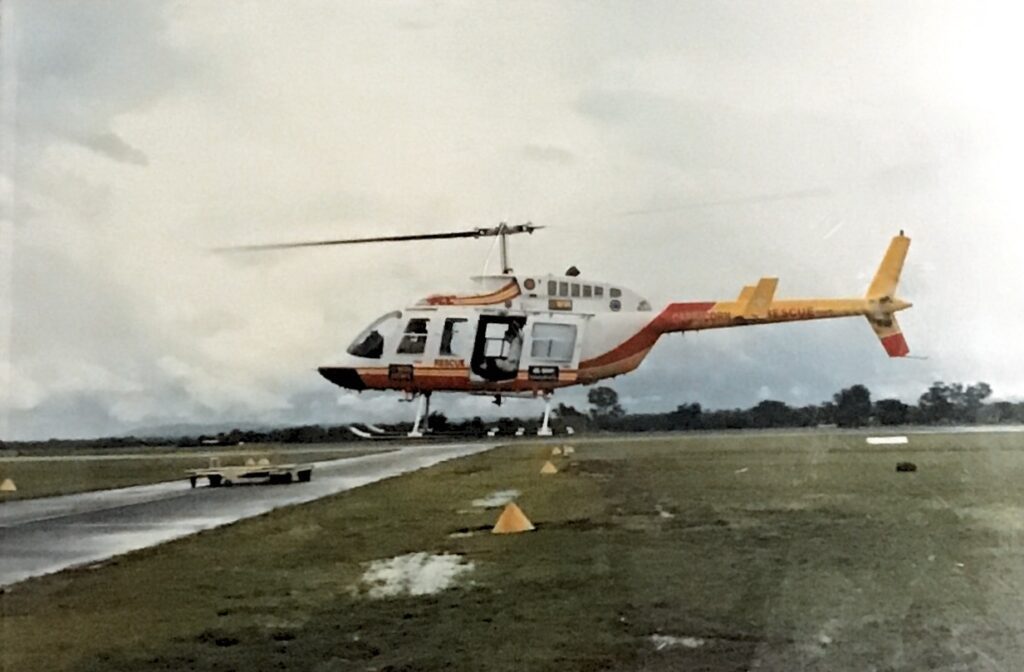
CapRescue has officially marked 30 years since its first rescue mission on 18 February 1996.
The milestone was launched in Rockhampton, recognising three decades as a rescue helicopter service in Central Queensland.
Chief Executive Officer Darren Pirie said the anniversary is a proud moment for the organisation.
“This is the launch of our media today for the first mission that we achieved back on 18 February 1996,” Mr Pirie said.
“This marks 30 years of our anniversary as a rescue helicopter service in Central Queensland. So one we are very proud of.”
Former paramedic and long-serving board member Mark Tobin was on board that first mission.
“On 30 years ago, on Wednesday, we had an American tourist on the beach at Great Keppel Island break his leg, and we were able to go and retrieve him on that afternoon,” Mr Tobin said.
“We landed on the beach there at Great Keppel Island and I attended to him with assistance from bystanders and the pilot, and we loaded the patient in.”
Federal Member for Capricornia Michelle Landry MP reflected on the growth of the service.
“What they have done over the last 30 years has been incredible, to start off from a small organisation with a few volunteers to what they have now,” Ms Landry said.
“I remember back in the day when we were fighting to get the funding for this place and it was an effort between the Federal Government, the State Government and also CapRescue with their donors putting the money forward.”
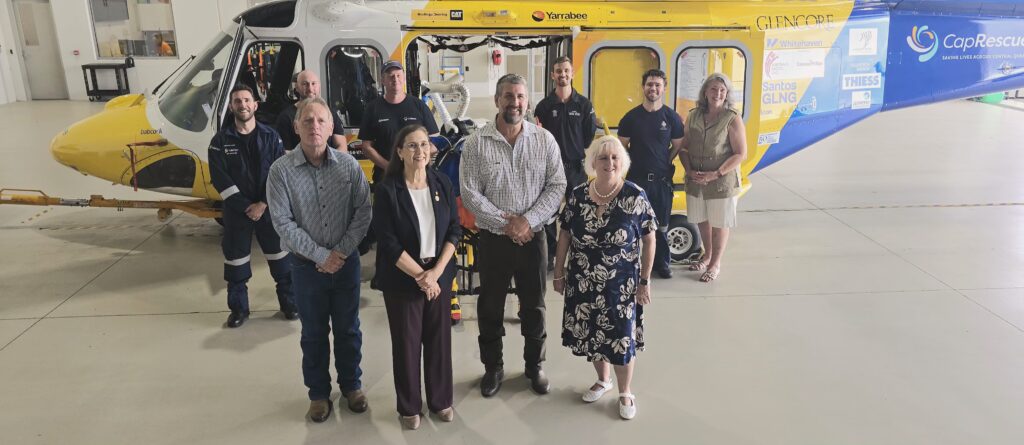
Front: Mark Tobin, Member for Rockhampton Donna Kirkland, Darren Pirie CEO CapRescue, Michelle Landry MP, Federal Member for Capricornia
Why it matters
Mr Pirie said the service was created to reach people in rural and remote areas quickly.
“We had a dream 30 years ago that we could access rural remote properties by helicopters,” he said.
“It’s obviously sometimes, unfortunately, the difference between life and death.”
Ms Landry said the helicopter has long symbolised reassurance in the region.
“You always thought that something had happened,” she said.
“It’s just been such a vital service that we’ve had for many, many years here in Rockhampton.”
Member for Rockhampton Donna Kirkland said the reassurance provided by the service cannot be overstated.
“The comfort that that brings to our community cannot be overstated,” Ms Kirkland said.
“Knowing the work that they do, the fact that they get into rural, remote, regional Queensland, it is an assurance that we’re delivering health services where and when you need them.”
Local Impact
CapRescue works alongside Queensland Health, the Royal Flying Doctor Service and other emergency agencies to move patients quickly to definitive care.
“Our health system’s become more complex every year and part of that is aeromedically moving patients,” Mr Pirie said.
He said patients are regularly transported within Central Queensland and to specialist hospitals in Brisbane when required.
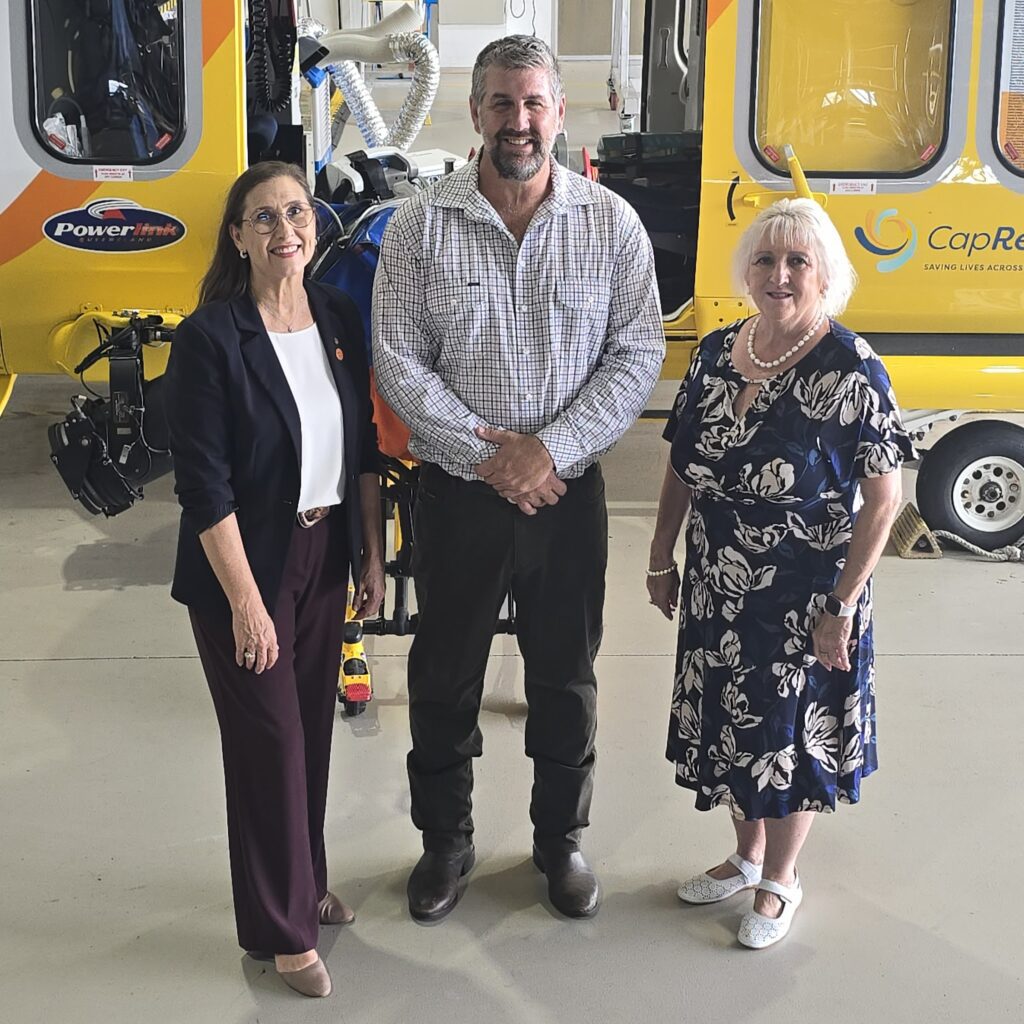
Ms Kirkland thanked the community for its ongoing support.
“The biggest piece of gratitude has to go to the community of Central Queensland,” she said.
“The fact that they continue to attend those fundraising events, they continue to buy those raffle tickets, every single one of those going towards saving a life.”
By the numbers
- CapRescue has completed just under 12,000 missions in its 30-year history, reflecting steady demand for aeromedical support across Central Queensland.
- In the past year alone, the service carried out about 650 missions, averaging between 1.5 and 2 callouts each day.
- Each year, the helicopter delivers more than 1,000 hours of in-air patient care, highlighting the scale and intensity of its operations.
Zoom In
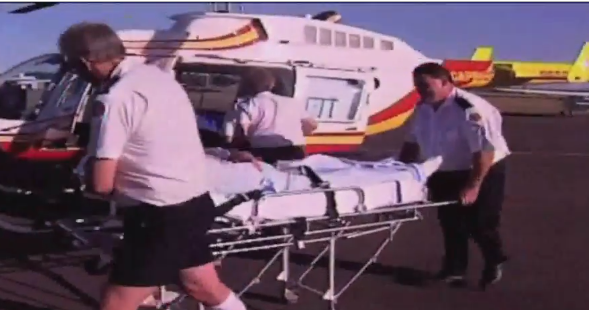
Mr Tobin said the first mission showed how critical the helicopter would become.
“Otherwise, that patient would have bounced back across rough seas on the Coast Guard and then a road ambulance to the hospital,” he said.
He also recalled receiving a letter from a Brisbane consultant after a serious retrieval from Marlborough.
“That boy would not have been alive if it wasn’t for what we did,” Mr Tobin said, describing the moment as “very humbling.”
Zoom Out
CapRescue now operates a twin-engine AW139 helicopter with a doctor and paramedic delivering 24-hour critical care.
“It’s about taking a breath and just reflecting on what we’ve done within the community,” Mr Pirie said.
“But you need to respect your history to allow you to move forward in the future.”
What to look for next?
As CapRescue enters its fourth decade, Mr Pirie said the focus is on new aircraft, more staff and continued growth to meet rising demand across the region.
